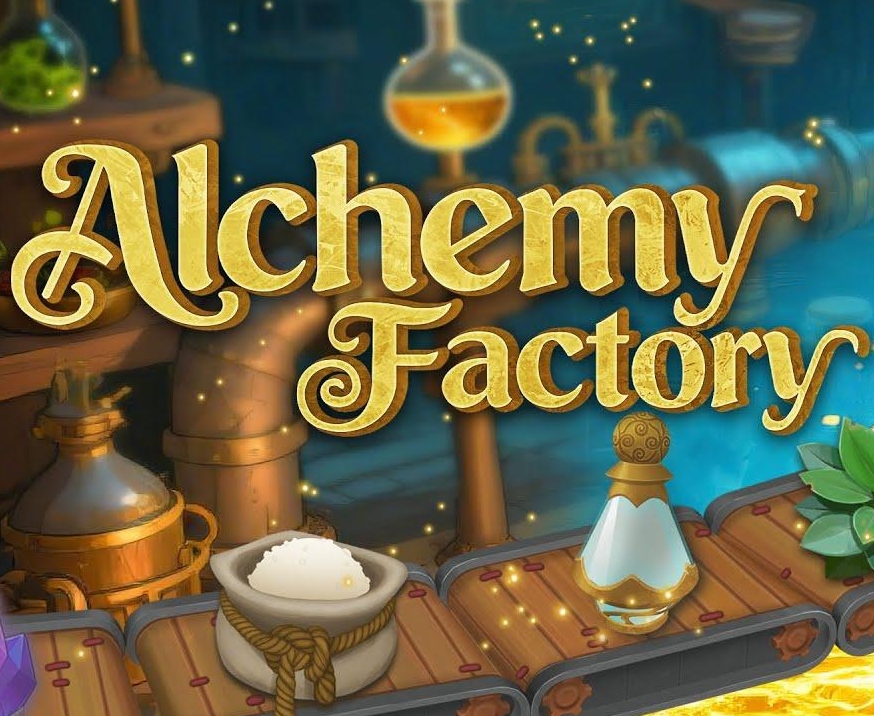
Potions are one of the most recognizable and meaningful outputs in Alchemy Factory. Unlike raw materials or components, potions often represent finished alchemy products that can be sold, stored, or used to support progression systems.
Potion production usually becomes relevant after basic production and components are in place, making it a natural next step once a factory begins to scale. This page explains what potions are, how they are typically produced, and why they play an important role in mid-game factory design.
What Are Potions?
In Alchemy Factory, potions are crafted alchemical items that:
- Are produced through multi-step processes
- Often require liquids, herbs, or processed ingredients
- Serve as sellable goods or progression-related outputs
Potions are rarely used as intermediate items. Instead, they usually mark the end point of a production chain. Because of this, potion production is often where players begin focusing on efficiency, throughput, and automation.
When Potions Become Relevant
Potion systems typically become important once a factory has:
- Stable raw material input
- Reliable component production
- Basic automation in place
At this stage, factories shift from simply “producing parts” to producing value. Potions often fulfill this role. This transition is discussed in more detail in the Automation and Mid-Game Guides.
Common Potion Production Inputs
Potion recipes usually require a combination of different item types.
Liquids
Liquids are a core part of most potion recipes.
Typical roles:
- Base fluids
- Essences
- Processed liquid ingredients
Liquid handling introduces new layout and routing considerations compared to solid-only production.
Herbs and Plant-Based Ingredients
Herbs often provide the defining properties of potions. They are commonly:
- Grown or harvested
- Processed before use
- Combined with liquids in alchemy machines
Herb supply often determines potion output capacity.
Processed Components
Some potions also require containers, refined components, or other supporting crafted items. These components connect potion systems back to earlier production chains.
Why Potions Are Important
Potion production matters for several reasons:
- Potions are commonly sold for income
- They often unlock or support progression
- They provide a clear production goal for automation setups
Because potion chains are longer and more complex, they reward thoughtful factory design.
Potion Production and Automation
Potions are well-suited for automation because:
- Recipes are repeatable
- Inputs are predictable
- Output value is consistent
Many players choose to automate potion production as their first major optimization project. Key considerations include stable input flow, liquid transport planning, and buffer storage for finished potions.
Common Beginner Issues With Potions
- Insufficient herb production
- Liquid routing bottlenecks
- Overproducing one input while lacking another
- Attempting potion automation too early
These issues usually resolve once component and raw material systems are stabilized.
How Potions Connect to Other Item Categories
Potions sit at the intersection of several systems:
- Raw Materials → Base inputs
- Components → Supporting items
- Liquids → Core ingredients
- Herbs → Alchemical properties
Because of this, potion production reflects the overall health of a factory.
What to Read Next
If you are exploring potion systems, the following pages are especially useful:
- Liquids in Alchemy Factory – Handling and routing fluids
- Herbs and Seeds – Supporting potion inputs
- Automation Guide – Scaling potion output efficiently
Final Notes
Potions represent a shift from basic production toward value-driven factory design. While not required immediately, they become one of the most satisfying systems to automate once a factory reaches stability.
As Alchemy Factory continues to evolve during Early Access, potion recipes and mechanics may change. This page will be updated accordingly.